WRITTEN BY A SCHOOL PSYCHOLOGIST · GRADES 6–12
Your teen isn't lazy. They're stuck.
A structured workbook with guided lessons and written exercises that help students in grades 6–12 start what they've been avoiding, follow through, and build steady routines. Written by a school psychologist with 20 years in schools.
Paperback · 185 pages · Grades 6–12 · ISBN 979-8-9967581-0-4
Ebook · 193 pages · Grades 6–12 · ISBN 979-8-9967581-1-1
Physical copies also at Barnes & Noble, Bookshop, Walmart, and Books-A-Million
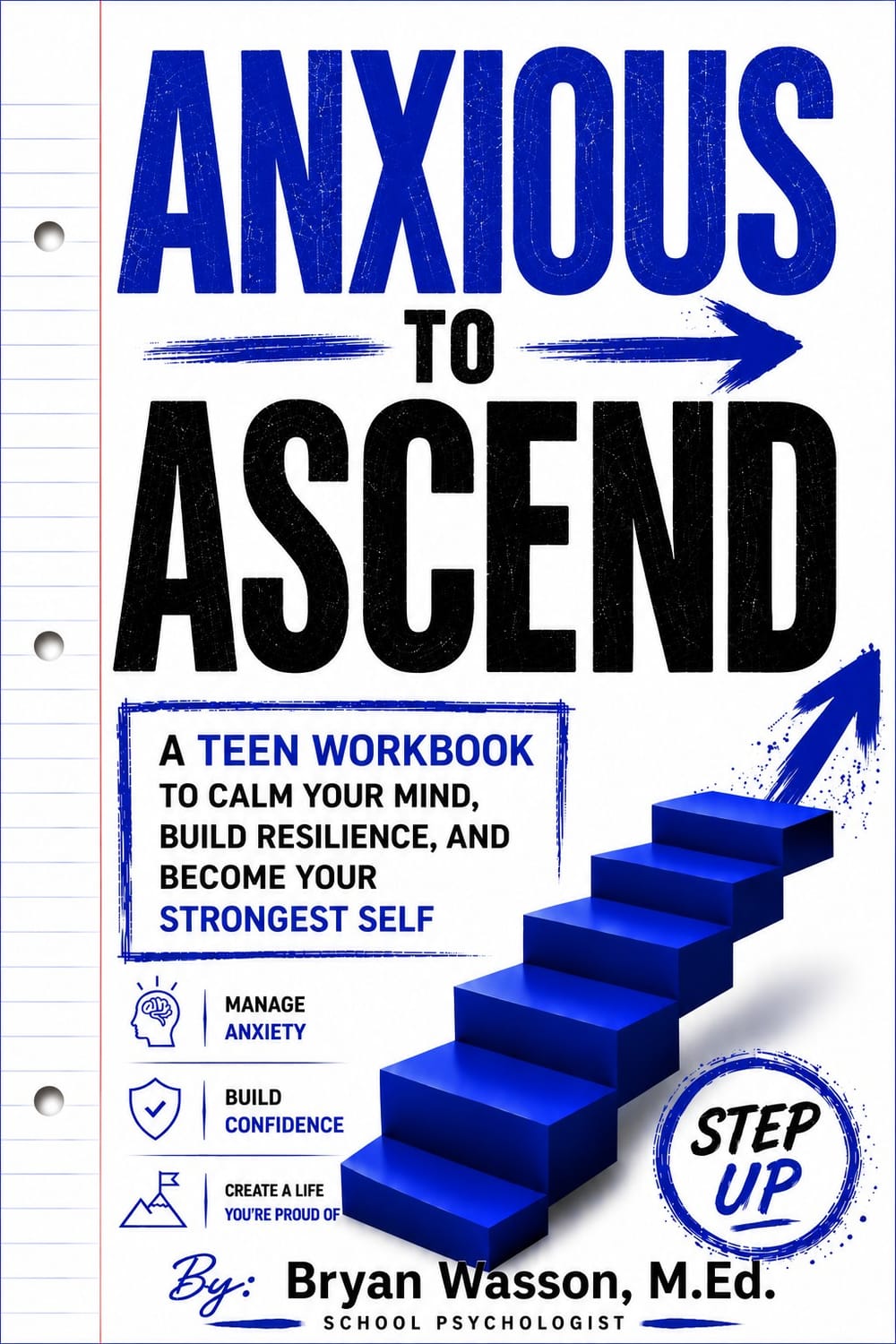
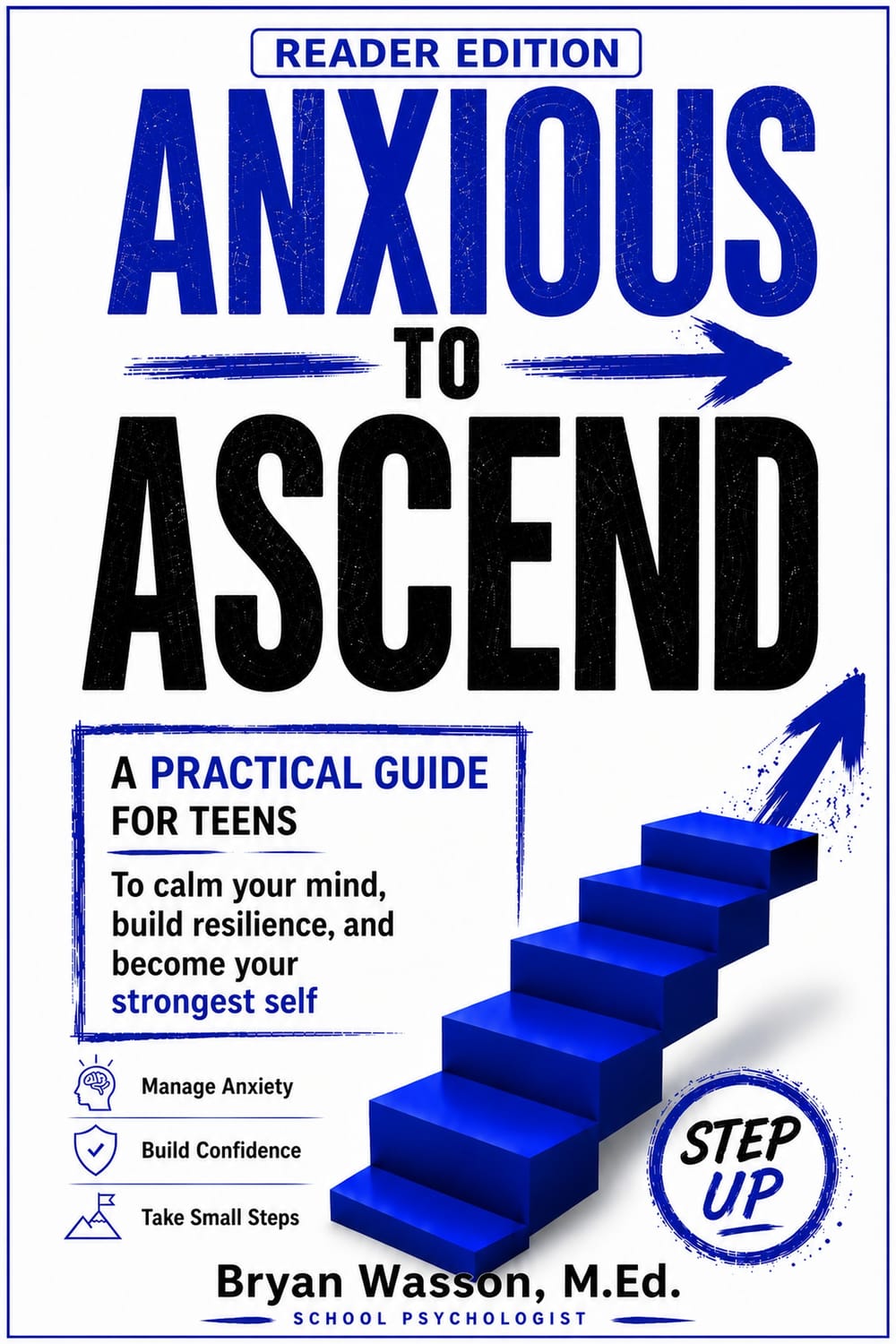
This is for the student who…
Stares at an assignment for an hour and writes nothing
Says "I'll do it later" and means it, every time
Shuts down over a project that should take twenty minutes
Is bright, capable, and falling behind anyway
Has been told to "just try harder" more times than you can count
What's actually in the workbook
Twelve chapters across three parts. Direct instruction, worked examples, and guided writing space on every page.
PART ONE — HEALING THE MIND
Chapter 1 — The Architecture of Identity
Separates a bad grade or bad moment from who your student believes they are.
Chapter 2 — The Vanguard Task
How to start the one task that's been stealing their peace.
Chapter 3 — Guarding the Control Room
How to protect attention before school, friends, and screens spend it first.
Chapter 4 — The Hierarchy of Contribution
How to stop working hard in circles and put effort where it actually counts.
PART TWO — BUILDING THE BRIDGE
Chapter 5 — The Language of Reality
How to tell the truth about a hard moment in a way that still leaves a next step.
Chapter 6 — The 10/90 Strategic Blueprint
How ten calm minutes of planning protects tomorrow's focus.
Chapter 7 — The Compound Effect of Action
How small kept promises to yourself become proof you can follow through.
Chapter 8 — The Architecture of Resilience
How to process a setback without letting it define what comes next.
PART THREE — MASTERING THE DAY
Chapter 9 — The Peer Environment
How the people around your student shape their focus and their future.
Chapter 10 — Goal Architecture and Future Vision
How to turn a vague wish into a real, specific target.
Chapter 11 — The Biological Baseline
Why sleep and basic body care have to be part of any real plan.
Chapter 12 — The Daily Operating System
How all twelve tools become one rhythm your student can return to.
Four tools your student will keep using
How to start when the task feels too big to start.
What to say to yourself in the gap between "I can't" and "I did."
A repeatable setup that gets a student into the work.
Small corrections that change the whole trajectory.
See inside...
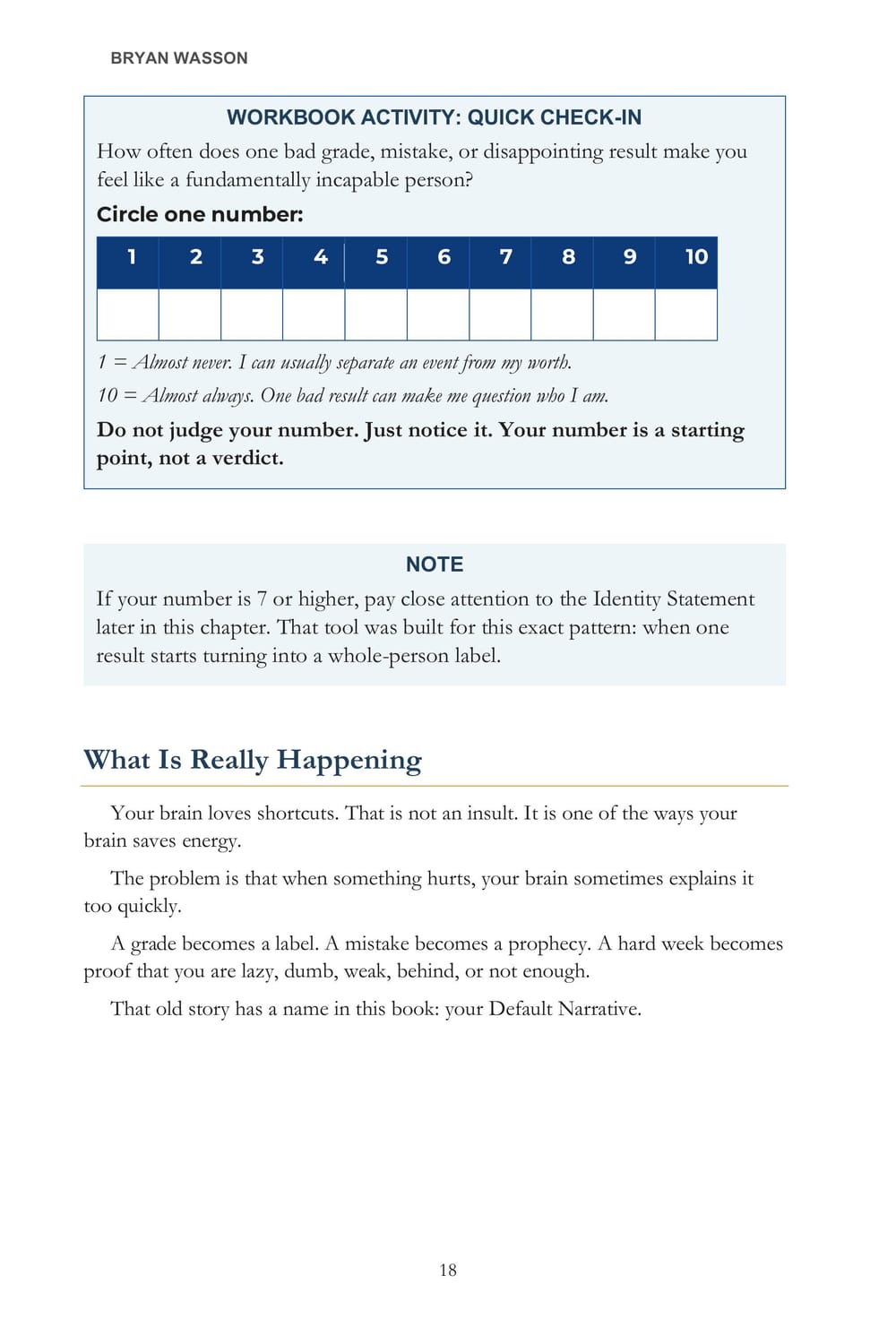
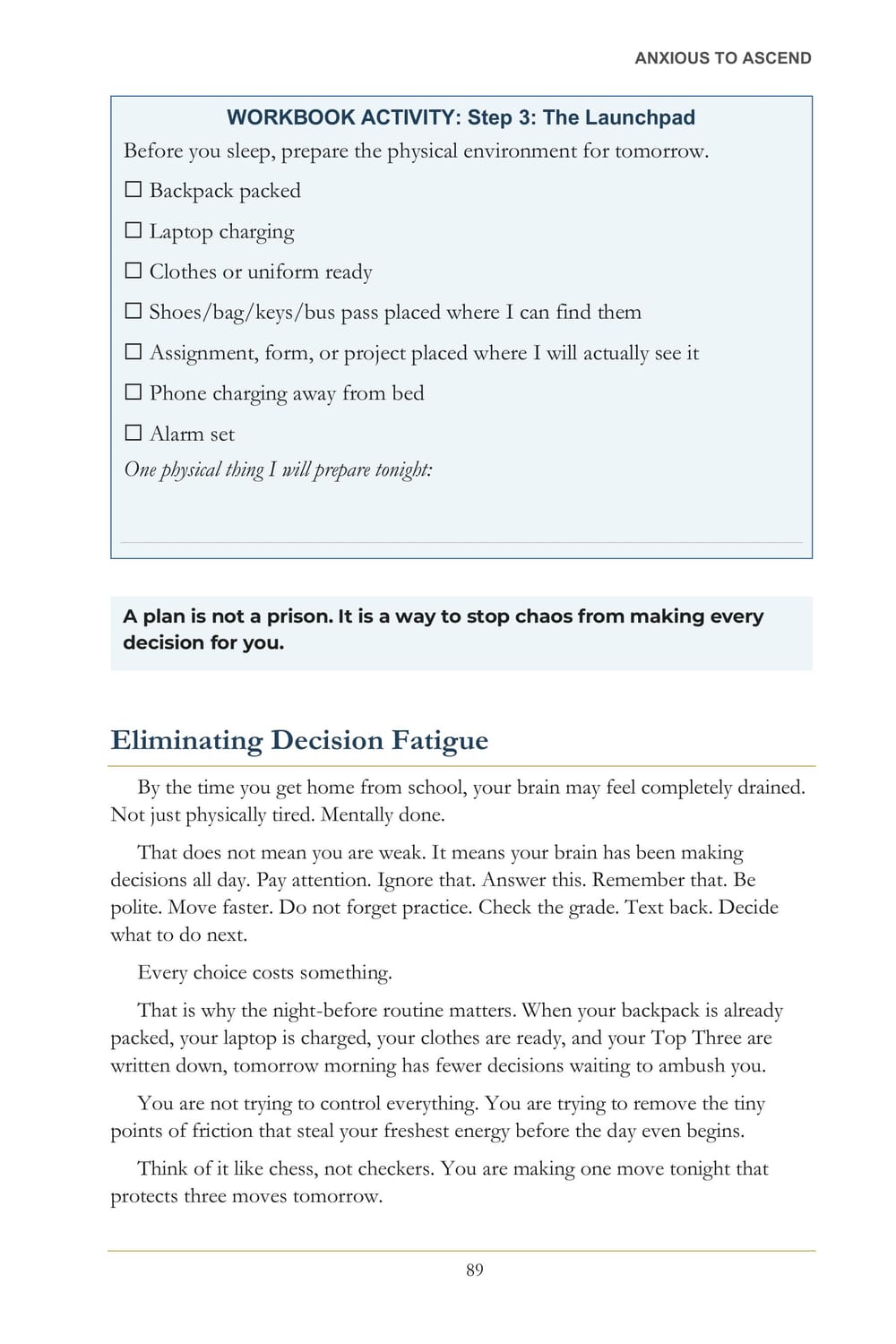
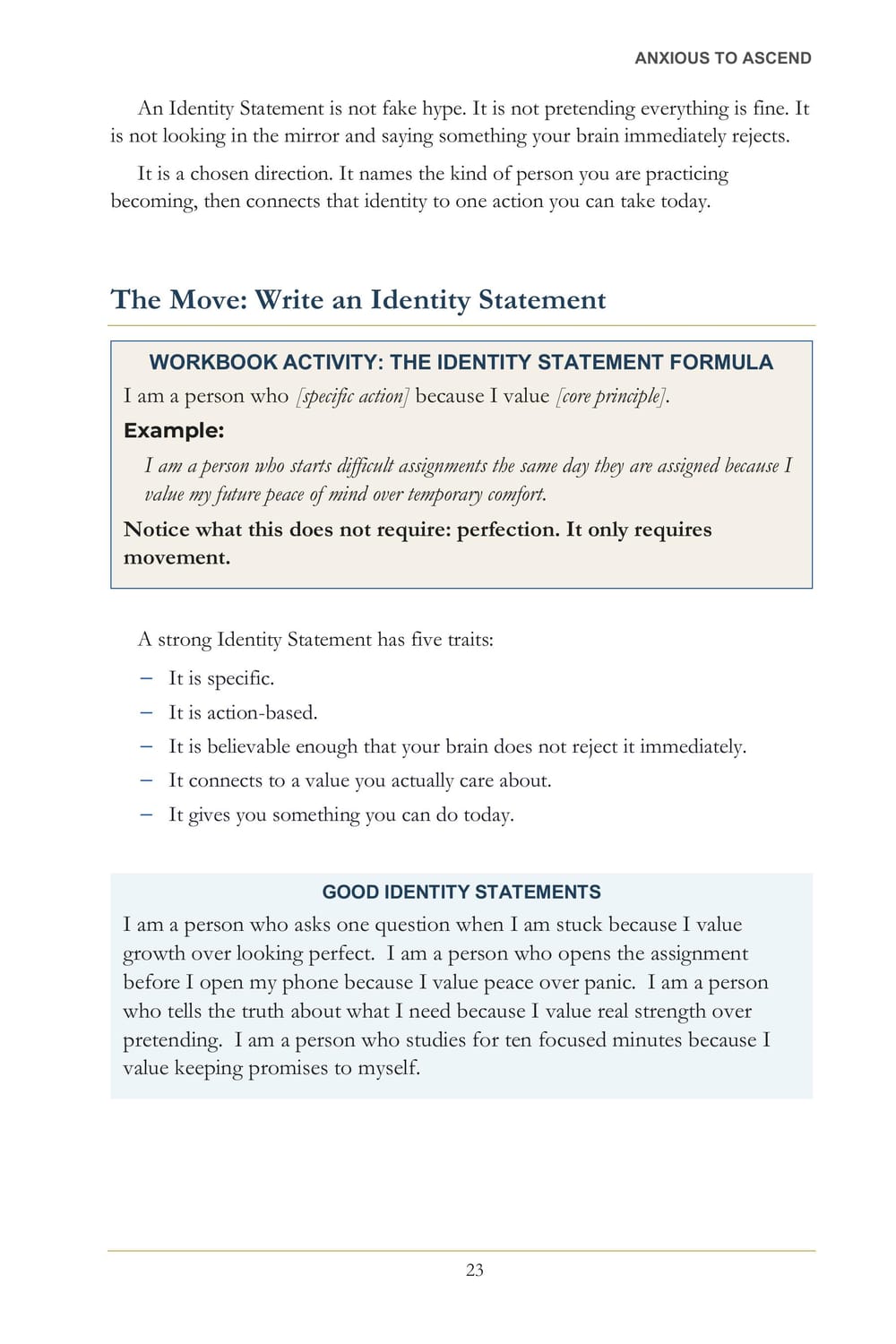
Grades 6–12. Works at home, in a classroom, or in a small group.

Bryan Wasson, M.Ed.
School Psychologist
I've spent 10 years as a school psychologist and almost 20 years in behavior and education. I wrote this because I kept meeting the same student (smart, kind, drowning) and kept giving parents resources that didn't help. This is what I wanted to hand them instead.
Before that, I spent five years in youth ministry, working alongside teenagers who taught me as much as I taught them, especially about how much is going on beneath the surface with a kid who looks like everything is okay.
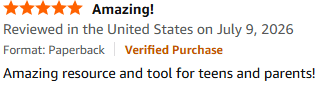
What people are saying
Written by a licensed school psychologist · Grades 6–12 · Used at home, in classrooms, and in small groups
Questions
Q: What ages is this for?
A: Written for grades 6–12. Students in grades 6–8 usually do better working through it with a parent or teacher. High schoolers often work independently.
Q: Does my student need me to do it with them?
A: No. It's built to work either way. There's a Parent Guide if you want to be involved and an Educator Guide for classroom use.
Q: Is this therapy?
A: No. It's an educational workbook with lessons and written exercises. It is not therapy, diagnosis, treatment, or crisis care.
Q: How long does it take?
A: Most exercises take 5–15 minutes. Students typically work through one unit a week, but there's no schedule to fall behind on.
Q: What if my student won't do it?
A: The first chapter was written for exactly that student. It opens with a five-minute task, not a commitment.
Q: Can I use this with a class or small group?
A: Yes. Class sets, bulk pricing, and the Educator Guide are here → wassonvanguard.com/educators
Q: Can I buy this with Arizona ESA funds?
A: Yes. Purchasing details and product specifications are here → wassonvanguard.com/curriculum
One small step is still a step.
Twelve chapters. Written for the student who already knows they're behind.
Get the 5-Minute Slice Reset: a resource your student can use tonight. Free.
No spam. Unsubscribe anytime.
Educational resource disclaimer: This resource is educational and informational only and is not therapy, diagnosis, treatment, or crisis care.
© 2026 Wasson Vanguard, LLC. All rights reserved.